Gonk guide
What Is a Gonk?
A gonk is a soft, bearded figure with a long hat pulled down over its eyes and a round nose peeping out. Here is where they come from, what they mean and what makes a good one.

In short
- A gonk is a small, usually soft figure with a long pointed hat covering its eyes, a big beard and a round nose.
- Modern gonks are inspired by the tomte and nisse, household spirits from Scandinavian folklore.
- In the UK, "gonk" is also the name of a furry 1960s novelty toy, which is where the word itself comes from.
- Gonks are mostly sold as decorations, not toys, so check the label before giving one to a young child.
- Christmas gonks are the best known, but there are now gonks for Halloween, Easter, Valentine's Day and every season in between.
What does a gonk look like?
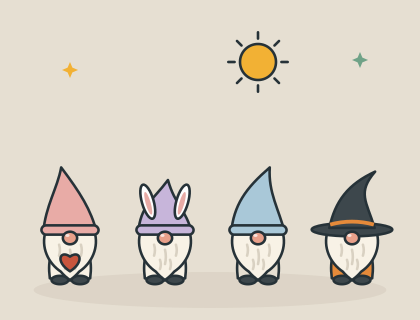
Almost every gonk shares the same few features, whatever the season or price:
- A tall, pointed hat that sits so low it hides the eyes completely. The tip often flops over or ends in a pom-pom.
- A round nose, usually pink or skin-toned, peeping out between the hat and the beard. It is often the only "face" a gonk has.
- A long, bushy beard of faux fur, wool or felt that covers the rest of the face and much of the body. Girl gonks often have plaits instead.
- A small, rounded body, with stubby feet, dangling legs or no visible legs at all.
That hidden face is what makes a gonk a gonk. It lets you decide whether yours is cheeky, sleepy or wise, and it is a big part of their charm. Our guide to types of gonk shows the main shapes, from sitting and standing gonks to hanging tree decorations and giant floor-standers.
Where do gonks come from?
Gonks have two family trees, and most articles muddle them.
The Nordic household spirit
The look of today's gonks comes from Scandinavian folklore. The tomte in Sweden, the nisse in Norway and Denmark and the tonttu in Finland were small, old, bearded spirits believed to live on farms and look after the animals and the household. Treat them well and good luck followed; offend them and they might play tricks. A bowl of porridge with a knob of butter on Christmas Eve was the traditional way to keep one happy.
Over the 19th century these figures became closely tied to Christmas, and the jolly, red-capped Christmas tomte and julenisse grew into gift-bringers in their own right.
The 1960s British toy
The word "gonk" is British. In the 1960s, London inventor Robert Benson created furry, egg-shaped novelty toys with googly eyes called gonks. They were a craze: Ringo Starr and Peter Sellers both owned them, and they appeared in a 1965 film called Gonks Go Beat.
When Scandinavian-style Christmas figures took off in UK shops, the old word was borrowed for them. Nobody seems to know exactly who first did it, but by around 2020 "gonk" was the standard British name. Read the full story in our history of gonks.
Is a gonk the same as a gnome?
Not quite, though the words are often swapped. A garden gnome has a visible face, a smaller hat and is usually ceramic or resin. A gonk hides its face under its hat and is usually soft. Americans tend to call gonks "Christmas gnomes" or "tomte". Our guide to gonk vs gnome vs tomte vs nisse explains the differences properly.
What do gonks symbolise?
There is no official meaning, but a few ideas come up again and again, all borrowed from the folklore:
- Protection. The tomte was a guardian of the home, so a gonk by the door is a nod to keeping the household safe.
- Good luck. Folk tales say a well-treated tomte brought good fortune to the family.
- Cosiness. Gonks fit perfectly with the Scandinavian idea of hygge: warmth, comfort and time together in the dark winter months.
For most people, though, gonks are simply fun. They are cheerful, a little silly, and easy to love.
Why are gonks so popular?
Gonks were sold in Scandinavian homeware shops for years before they hit the British mainstream. The big boom came around Christmas 2020, when budget gonks became one of Poundland's best-selling decorations and photos of them filled social media. Since then, shops have released new ranges every season.
A few things explain why they have stuck around:
- They suit almost any style, from traditional red and white to calm Scandi neutrals.
- They come in every price range, from pocket-money minis to statement giants.
- New seasonal designs give collectors a reason to add to their gang. See our gonks for every season guide.
- They make easy, cheerful gifts for children and adults alike.
What makes a good gonk?
Whether you spend £3 or £50, look for:
- A well-proportioned hat that holds its shape or flops attractively, rather than creasing or sagging oddly.
- A full, soft beard that doesn't shed when you run your fingers through it.
- Neat stitching, with the nose firmly attached.
- A stable base. Sitting gonks are often weighted with sand or pellets so they don't topple over.
- Clear labelling: a size, the materials, and whether it is a toy or a decoration. If it is for a child, read are gonks safe for children? first.
Where to go next
Start your collection with our Christmas gonks guide, find out where to buy gonks in the UK, or browse our hand-picked gonks.
Questions and answers
What is a gonk?
A gonk is a small, usually soft figure with a long pointed hat pulled down over its eyes, a round nose and a big beard. The look comes from the tomte and nisse of Scandinavian folklore, while the name comes from a furry 1960s British toy. Read more.
What do gonks symbolise?
There is no official meaning, but gonks are often linked with protection, good luck and cosiness, ideas borrowed from the Scandinavian tomte, a folklore guardian of the home.
Why do gonks have no eyes?
Gonks do have eyes, according to fans: they are just hidden under the hat. The hidden face is the gonk's signature look, and it lets you imagine its expression for yourself.
Gonks to explore

Cute Traditional Mr & Mrs Santa Christmas Gonks
Santa Claus gonk and one Mrs Claus gonk for a complete holiday display. Standing at approximately 20cm tall.
View on Amazon (Cute Traditional Mr & Mrs Santa Christmas Gonks)As an Amazon Associate we earn from qualifying purchases. Some other links on this site are affiliate links too; it never changes the price you pay.